
How Fun Palaces is working with Makers to challenge barriers, build connections and create the conditions for grassroots creativity to thrive.
Just over a year ago, Fun Palaces embarked on a new period of activity and focus. A new four year grant from The National Lottery Community Fund gave the HQ team a chance to think, long-term, about how to support and build on the brilliance of Fun Palaces’ Makers and activity. We were interested in thinking about systems change – looking beyond how individual Fun Palaces happen year-to-year, and ‘zooming out’ to explore how we might make it easier for grassroots, community-led creativity to thrive.
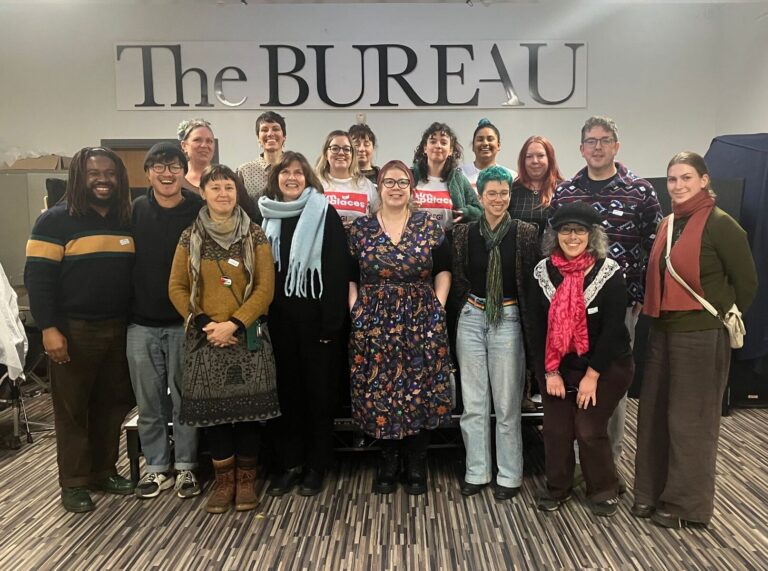
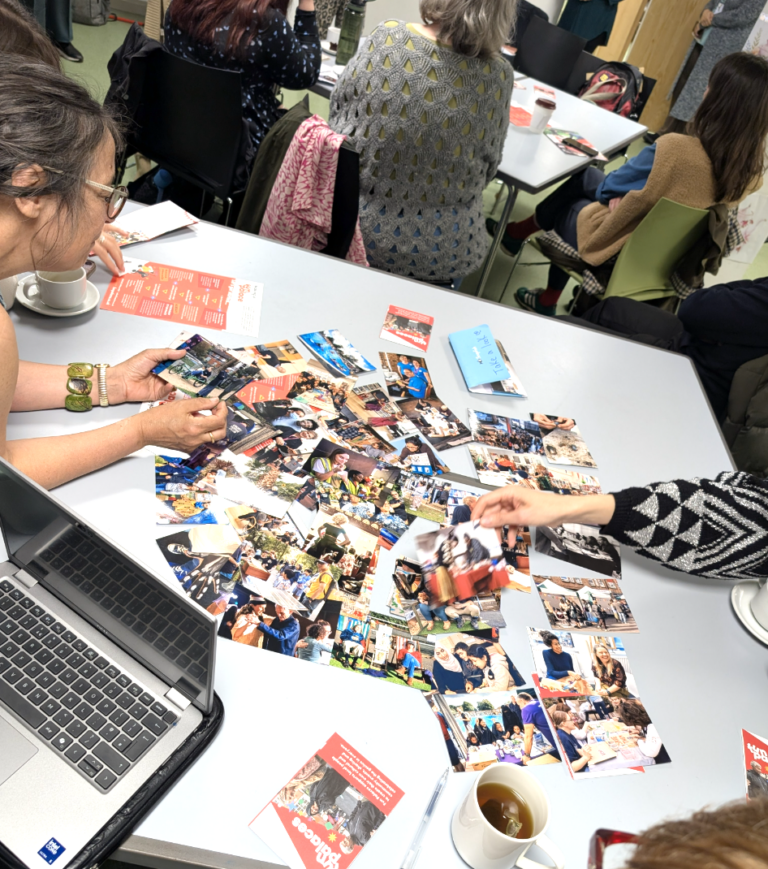
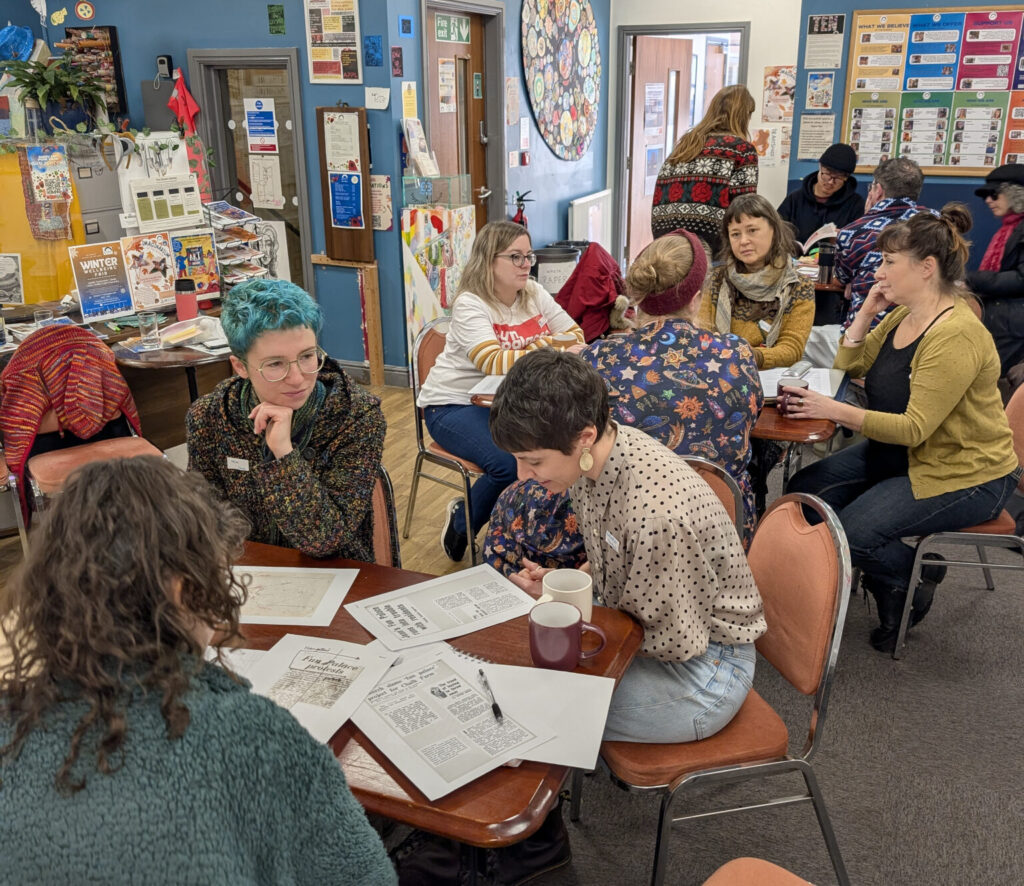
A new Makers’ network – meeting periodically throughout the year in Middlesbrough, Blackburn, Birmingham and Cwm Garw, South Wales, brought together folk who understand deeply what it is to make and nurture a Fun Palace. Together, we started to think about what helps Fun Palaces (and Fun Palaces-type activity) to thrive, what holds it back or makes it more challenging, and what a world would look like that embraced and nourished the genius in everyone.
Two ways of realising systems change
What emerged through all those conversations and activities is that we see two ways of realising systems change. There’s work within the systems and structures of our society – lobbying government, local authorities, funders and others to more effectively recognise and support grassroots activity. And there’s work outside those systems, work that recognises that power, hierarchy and inequality is baked into those structures, and that some kinds of change can best (or only) be realised by forging independent, grassroots, self-sustaining movements. We see other kinds of activist movements operating both within and beyond the system, such as trans rights movements lobbying for legal protection and recognition whilst organising their own community-led access to funding, treatment and care. Feminist, anti-racist, queer and disability-rights movements have long shown us what it is to hold systems to account, whilst not waiting for them to catch up to make positive change happen.
And so, based on these movements that came before us, the knowledge and expertise of Makers, and the inescapably local, hands-on, throw-it-all-together-and-trust-something-glorious-will-emerge ethos of Fun Palaces, we’re gradually shaping a two-pronged approach to realising systems change:
1. Holding systems to account
One, we will hold governments, systems and funders to account. We believe that everyone has the right to make, shape and access the kinds of creativity that matters to them, and that those with power should enable and support us to realise that right.
This year, we have:
- Submitted evidence to the UK Parliament’s State of Play inquiry, led by the Digital, Culture, Media and Sport (DCMS) Committee to spotlight underreported, underappreciated, or previously unheard issues across the creative, media, and sporting sectors. We asked the Committee to examine the issues and opportunities surrounding community spaces and venues, with the aim of making sure that people have access to venues and spaces to meet that are affordable, practically accessible, well-maintained, and fit for the purposes communities need them for.
- Presented at the National Theatre of Scotland’s ‘Unconference’ on Culture, Democracy, and the Stateless Nation, inviting attendees to imagine what could happen if we were to orient our cultural landscape around a recognition and celebration of the genius in everyone, and trust and resource communities to create the activity they most want and need.
- Joined the Community Spaces Forum, connecting with organisations such as Community Leisure UK, Theatres Trust, UK Music and Community Matters to more effectively campaign on access to community venues.
- Submitted evidence to The National Conversation, led by the Independent Commission on Community and Cohesion, which aims to develop a vision and a series of practical recommendations for how people can be supported to live well together. Our evidence demonstrated what it takes (and how it feels) for people to feel a genuine part of their community, and shared Makers’ experiences of what would need to change for people to be able to build trust and rely on each other more.
- Contributed to the World Health Organisation’s Commission on Social Connection, sharing evidence that initiatives like Fun Palaces effectively work to bring people together, tackle social division, and create opportunities to learn and grow together, and that Makers and participants report positive effects on how that makes them feel.
- Joined a new Strategic Forum on Grassroots Creativity, designed to bring together policymakers, funders, academics, commissioners and leaders from relevant bodies from across the UK & Ireland to strengthen the position of grassroots creativity and the role it plays.
- Shared evidence with the Workers’ Educational Association on the importance of Lifelong Learning (through skills sharing and peer-led learning) in addressing issues of community cohesion – both via their round table event and online call for evidence.
- Submitted evidence to Intergenerational England to support their policy work around the benefits of Intergenerational Connection, using examples from Fun Palaces to support our findings.
2. Building beyond existing systems
Two, we will work outside the existing systems of power to directly broker relationships, tackle barriers and create the conditions for grassroots creativity to thrive.
This year, this has begun by identifying the barriers – (inter)personal, societal, economic, administrative – that make it harder for communities to come together and create Fun Palaces. We’ve been imagining what a world that is radically enabling of grassroots creativity would look like, and connecting Fun Palaces as a movement in solidarity with other campaigns – including those that address global crises, seek to tackle hierarchy and inequality, and support communities to come together and create change. We’re increasingly conceiving of Fun Palaces as one small part of an ecosystem that is collectively striving toward a fairer, more sustainable, creative and nourishing world. We want to develop new ways to directly tackle the barriers facing Makers, whether that be building networks and connections that bypass traditional gatekeepers, building our own knowledge-sharing forums, or sharing examples of activity that happens without funding, permission or formal authority.
We’re increasingly conceiving of Fun Palaces as one small part of an ecosystem that is collectively striving toward a fairer, more sustainable, creative and nourishing world.
Looking ahead
Over the coming year, we’ll look for ways to continue to develop both of these strands – holding current systems and processes to account in recognising, celebrating and supporting grassroots creativity and meanwhile finding ways to create more fertile ground to nourish Makers and Fun Palaces ourselves.
Be part of the conversation
The Makers’ Network brings people together to share experiences, learn from one another and help shape the future of Fun Palaces. Find out more about the network and the support available for making a Fun Palace.